How to Reduce Logistics Costs
18 November 2026
updated at: 20 November 2026
8 min
Logistics costs rarely increase due to a single major mistake. More often, they result from a multitude of small deviations: an extra trip, an underloaded vehicle, a carrier rate higher than expected, downtime during loading, a delay at a transit point, a late status update, manual invoice reconciliation, or unaccounted-for additional expenses.
Taken individually, these situations seem like ordinary operational details. But on the scale of regular shipments, they add up to a consistent loss of money. Therefore, reducing logistics costs doesn’t start with a one-time search for a cheaper carrier, but with understanding exactly where in the process unnecessary expenses arise.
The main challenge is that shipping information is often scattered among different parties. An order mightbe in the accounting system, the route in a spreadsheet, the carrier’s rate in correspondence, the delivery status with the dispatcher, the documents with the accounting department, and the actual delivery times in a report that won’t be available until after the shipment is complete. Formally, all the information exists, but the logistics specialist has to manually piece it all together.
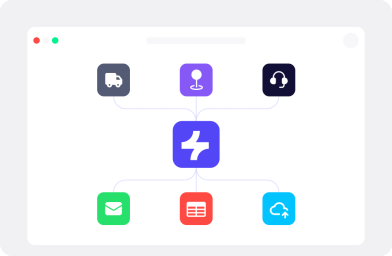
SimpleTMS bridges this gap through a unified process card. The order, route, carrier, vehicle, rate, delivery events, documents, and charges become interconnected elements of a single chain. This is important not in and of itself, but because it allows you to quickly understand why a specific delivery plan was chosen, where a deviation occurred, and how it affected the cost.
Planning: Fewer Unnecessary Trips and Underloads
One of the most significant sources of savings lies even before transportation begins. During the planning stage, you determine how many vehicles will be needed, which orders can be combined, what constraints must be considered, and which route will be most efficient.
For small volumes of shipments, planning can be done manually. But as the number of orders grows, too many factors come into play: time windows, cargo specifications, vehicle availability, driver schedules, route restrictions, warehouse characteristics, and recipient requirements. An error in any of these parameters can result in an unnecessary trip, underloading, or a missed deadline.
In SimpleTMS, the logistics specialist starts with the order registry and marks prepared requests as ready for planning. After that, a planning document is created in the planning module: orders, a truck fleet or virtual fleet, transportation modes, drivers, work schedules, and optimization parameters are selected. The system checks the input data—for example, for schedule conflicts, sufficient information in the order, and the correctness of available resources—and then generates a planning scenario.
For a logistics specialist, this is not just a route on a map, but a calculated plan with metrics: which orders were included in the trips, what type of transportation was used, and what was optimized—time, distance, utilization, or cost. This approach reduces the number of ad-hoc decisions. The company runs fewer unnecessary trips, makes better use of its fleet, and has a clearer understanding of where its own fleet is more cost-effective than using a third-party carrier.

Carriers: Price is important, but not the only criterion
Attempting to reduce costs solely by seeking the lowest rate does not always lead to the best outcome. The cheapest carrier may fail to confirm a vehicle for the required date, disrupt the delivery schedule, or create additional risks regarding deadlines. As a result, savings on the rate are offset by downtime, urgent replacements, and claims processing.
A more sustainable approach is to compare carriers’ offers in the context of a specific shipment. It’s important to consider the route, deadlines, cargo requirements, vehicle availability, the carrier’s track record, and its ability to fulfill its obligations.
In SimpleTMS, this is managed through the bidding parameters in the order card. The logistics specialist can choose between manual selection, a request for a price quote, or an auction. Participants can be restricted using whitelists and blacklists to ensure that only suitable carriers take part in the process. The bids received are displayed in the system, and the selection history is saved along with the order.
This process makes freight procurement more transparent. It’s easier for the logistics specialist to compare offers, for the manager to understand the rationale behind the selection, and for the company to analyze how rates vary by route. If fixed rate schedules apply to certain routes, they are used for preliminary calculations. If the rate depends on current market conditions, you can request a quote from a pool of carriers and lock in a spot offer for a specific request.
Execution: It’s Cheaper to Correct Deviations Early
Even a well-planned shipment can become more expensive during execution. Cargo may be delayed at a transit hub, a truck may not have reached the next leg of the route, there may have been no updates on delivery for a long time, documents may not have been submitted on time, or the route may have had to be changed due to external circumstances. If such issues are discovered too late, there are fewer options for responding, and the cost of resolving them increases.
Tracking shipment progress isn’t just about answering the question “where is the shipment?” It’s far more important to understand which deliveries are deviating from the plan and what actions are needed right now.
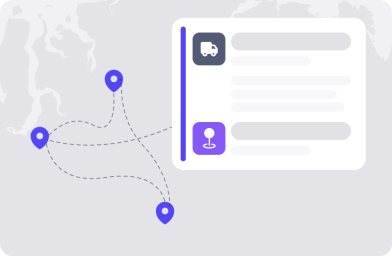
In SimpleTMS, shipments are tracked through statuses, events, and a history of actions. The shipment card displays planned and actual dates, route stages, responsible parties, documents, related tasks, and charges. For multi-leg and multimodal shipments, the stages reflect not only the final delivery but also intermediate points: arrival at a transit hub, departure from it, a change in leg, carrier, or delivery method.
If a deadline is missed for a stage or there has been no movement for a long time, this can be flagged in a notification, task, or tracking log. The logistics specialist sees not an abstract problem, but a specific point in the chain: where the shipment is delayed, which stage is incomplete, and who is responsible for entering the next event. This is especially important for companies with transit warehouses and consolidation warehouses, because tracking is based not only on the vehicle or container but also on the contents of the shipment.

Analytics: Focus on the causes of costs, not the costs themselves
Cost reduction cannot be sustained through a one-time project. Even if you manage to renegotiate rates or optimize routes today, volumes, destinations, rates, transportation availability, and time-sensitive requirements will change in a few months.
In SimpleTMS, this task is addressed through dashboards, ledgers, and the report builder. Users can work with operational dashboards for deliveries, carriers, in-house transportation, documents, costs, payments, transit balances, and shipments with special characteristics. For managers, it’s important to analyze actual versus planned data regarding timelines, costs, service providers, and delivery stages. For logistics professionals, it’s the control ledgers, where shipments with deviations, delays, missing events, or unclosed documents are immediately visible.
The role of analytics in SimpleTMS goes beyond just pretty graphs. It helps shift the focus from “how much was spent” to “why was exactly that amount spent.” If costs have risen due to a specific route, carrier, leg of the route, transit delays, or recurring additional expenses, this can be identified and turned into a management action: revise the rate, change the delivery scheme, exclude an unreliable contractor, or adjust the planning rules.

Conclusion
Reducing logistics costs starts with process control. It’s not enough to know how much the shipment cost. It’s important to understand what decisions led to that cost: how the request was created, which route was chosen, why a specific carrier was selected, where deviations occurred, and what expenses arose after fulfillment.
SimpleTMS helps bring this entire chain together in a single workspace. The system does not replace the logistics expert’s judgment but makes it more effective: it links the order, planning, execution, documents, rates, charges, and analytics. As a result, the company can identify deviations more quickly, select carriers more accurately, utilize transportation more effectively, and establish a foundation for consistently reducing logistics costs.
Ultimately, savings come not from a single action, but from more precise management of the entire delivery chain.