How to Monitor Plan-Versus-Actual Performance Across the Entire Supply Chain
18 November 2026
updated at: 11 August 2026
10 min
How to Monitor Plan-Versus-Actual Performance Across the Entire Supply Chain
In logistics, plan-versus-actual analysis isn’t meant to identify problems after the fact. Its purpose is to show exactly where the supply chain begins to deviate from the plan, who is responsible for the next step, and how this might affect delivery times, costs, and quality.
In logistics, the plan and actual results almost never align perfectly. A truck might be late for loading, a shipment might be delayed at a transit point, documents might arrive after the delivery itself, and the actual cost might differ from the preliminary estimate. This is a normal part of operations. The problem arises when a deviation is noticed too late or cannot be linked to a specific stage in the supply chain.
This is especially important for complex shipments. A delivery may involve multiple legs, different service providers, transit warehouses, transshipments, in-house transportation, third-party carriers, and separate documents for each stage. If a company monitors only the final result—such as the shipment’s arrival at the recipient’s warehouse—it loses control over the intermediate stages. The shipment may already be delayed, but this will only become apparent in the system at the very end.
Why It’s Difficult to Monitor Plan-Versus-Actual Manually
At the level of a single shipment, the plan-versus-actual comparison seems straightforward. There is a planned shipment date, a planned arrival date, and the actual outcome. But in real-world logistics, simply comparing dates isn’t enough. You need to understand when the shipment was supposed to leave each point, when it actually arrived, how long it was in transit, when it was handed over to the next carrier, when the documents were received, and what additional costs arose along the way.
If this data is collected from different sources, monitoring turns into a manual reconstruction of events. The logistics specialist cross-checks letters, carrier statuses, spreadsheets, warehouse documents, driver reports, and data from the accounting system. As a result, the plan-versus-actual analysis appears as a post-event report rather than as a management tool during the delivery process.
This approach creates two problems. The first is a delayed response. A deviation is detected only when it is already difficult or costly to correct. The second is the loss of the cause-and-effect relationship. A manager sees that a delivery has been delayed or has become more expensive, but does not always understand at which stage this occurred or what actions might have influenced the outcome.

What Exactly Needs to Be Monitored
The plan-versus-actual analysis along the supply chain is not limited to dates. In a mature process, planned and actual values are compared across several levels: timelines, routes, contractors, events, documents, and cost.
When it comes to timelines, it’s important to track not only the final delay but also intermediate delays. For example, a shipment arrived at a transit warehouse on time but left it later than the planned deadline. Formally, the final delivery may not yet be overdue, but a risk has already arisen.
Regarding the route, it is important to understand whether the delivery is proceeding according to the approved plan or if changes have occurred. Sometimes the route is adjusted for objective reasons: the delivery method changes, a stage is added, or a transshipment point is moved. But such changes must remain visible; otherwise, it is impossible to explain subsequent deviations in timing and cost.
Regarding the parties involved, it is necessary to specify who is responsible for each stage. If the chain includes a carrier, a consolidation warehouse, a transit hub, a freight terminal, and a final warehouse, the plan-versus-actual report must show not only the status of the shipment but also the area of responsibility.
When it comes to documents, it is important to verify not only the existence of a file but also its association with a specific delivery, stage, or cost. Documents often finalize the process only after the physical transport has been completed, and a delay in the primary documentation can affect payment, accounting, and claims processing.
In terms of cost, the preliminary estimate must be compared with the actual charges. Additional expenses, adjustments, and downtime must be linked to the stage where they occurred. Otherwise, the analytics will show a rise in costs but will not provide a solution for preventing it.

How This Works in SimpleTMS
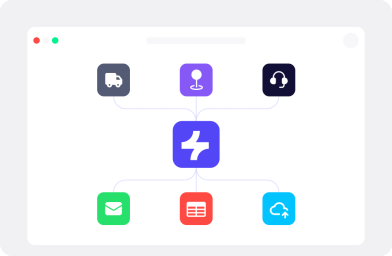
In SimpleTMS, plan-vs.-actual monitoring is built around a linked shipment or delivery card. It consolidates the route, stages, planned dates, actual events, executors, documents, tasks, charges, and activity history. This allows the logistics manager to view the chain not as a set of separate records, but as a sequence of manageable stages.
If a delivery consists of multiple legs, the plan can be broken down into stages and operations. For each stage, planned deadlines, the responsible party, required documents, and associated actions are specified. As the process unfolds, actual events are recorded in the system: shipment, arrival at a transit point, departure from that point, arrival at the final warehouse, and stage completion. Based on these events, it becomes clear where the plan is being followed and where deviations occur.

For logistics professionals, this changes the nature of monitoring. Instead of asking, “Where is the shipment?” a more precise question arises: “Which stage of the chain is deviating from the plan, and what needs to be done next?” If a stage is overdue, this can be reflected in the registry via a status, indicator, dashboard view, or task assigned to the responsible party. If there are no events related to the shipment within a specified period, the system can trigger notifications or apply monitoring rules.
This approach is particularly useful in multimodal and multi-leg shipments. The logistics specialist sees not only the final delivery date but also the status of each stage: shipment from the supplier, storage at the consolidation warehouse, transit to a transfer point, transshipment, onward shipment, and receipt at the final warehouse. This reduces the risk of a situation where a shipment is technically “in transit” but is actually already delayed at one of the intermediate stages.

How Plan-Actual Analysis Helps Manage Costs
Time and money are closely linked in logistics. A delay at any stage can lead to vehicle downtime, urgent carrier replacement, additional storage, route changes, or claims processing. If a deviation has no financial implications, the company sees only an operational issue. If there is a connection, it becomes possible to quantify its cost.
In SimpleTMS, charges, invoices, additional expenses, and pricing history can be linked to a specific shipment or delivery. This allows you to compare the planned cost with actual expenses and identify where discrepancies occurred. For example, if a delivery became more expensive due to an additional operation, downtime, or a route change, this can be attributed to a specific stage rather than simply added to the total expenses.
This approach is useful not only for closing out a shipment but also for future planning. If a certain transit point regularly causes delays, or a specific carrier frequently results in additional expenses, this should influence future decisions. The plan-versus-actual analysis becomes not merely an archive of events, but a source for adjusting rules: route selection, carrier selection, stage limits, and contract terms.

Plan-vs.-Actual Analysis During the Planning Stage
Plan-vs.-actual monitoring begins not after the shipment is dispatched, but at the moment the plan is formed. The more precisely the system links the order, available transportation, service providers, deadlines, and constraints, the easier it is later to understand why the actual results differ from the initial calculation.
In SimpleTMS, planning scenarios can be compared based on key metrics: number of trips, number of stops, vehicle load, execution time, and overall plan parameters. If, after execution, these values consistently deviate from the actual results, this is a signal not only to analyze a specific shipment but also to adjust the planning rules.

Plan vs. Actual for the Manager
For a logistics manager, it’s not every individual status that matters, but the big picture across the entire supply chain. How many shipments are delivered on time? Where do deviations occur most frequently? Which stages cause the greatest delays? Which carriers are reliable, and which require additional oversight? Which routes most often exceed the planned cost?
In SimpleTMS, the plan-vs.-actual analysis is part of the Control Tower—a unified operational control center where any identified deviation can be immediately traced back to a specific shipment, stage, or responsible party.
In SimpleTMS, these issues are addressed through dashboards, ledgers, and analytics. Operational data from order, delivery, shipment, event, document, and billing records is aggregated into metrics. A manager can view plan-versus-actual data by deadlines, personnel, routes, stages, costs, and documents. Logistics specialists, in turn, work with monitoring logs: they can see shipments with delays, missing events, open documents, or cost variances.
The value of such analytics lies not in the mere existence of charts. It helps shift the focus from discussing individual problems to managing recurring causes. If delays regularly occur at a specific type of stage, the delivery process can be adjusted. If cost variances are linked to specific routes, you can revise the rates. If the problem lies with the documents, you can change the rules for closing them out.

Conclusion
Plan-vs.-actual monitoring across the supply chain isn’t just for the sake of reporting. It helps identify where the actual process deviates from the plan, how this affects timelines and costs, who is responsible for the next step, and what decisions need to be made.
SimpleTMS supports this approach by linking routes, stages, statuses, events, performers, documents, charges, and analytics. Logistics specialists gain a tool for real-time monitoring, managers get a comprehensive overview of the entire supply chain, and the company gains the ability to reduce risks, minimize unplanned expenses, and improve delivery predictability.
When plans and actual results are visible not only in the final report but at every stage of delivery, logistics becomes manageable not after the fact, but during the execution process.